|
Past Reviews What's New on the Rialto Interview with Jesse Tyler Ferguson
by Michael Portantiere
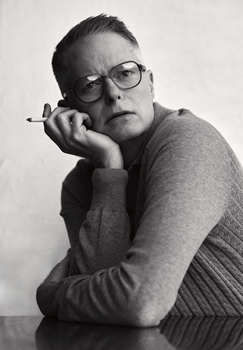
Jesse Tyler Ferguson: I didn't see it live, but the show exists on PBS, and that's on YouTube. I think it was recorded shortly after he had done it on Broadway–maybe in L.A.? First of all, I'm impressed by anyone who can hold a stage by themselves for 90 minutes, and he did such a great job with it. As I was watching it, I kept reminding myself that, when Morse did the show, it was shortly after Capote passed away. I thought how interesting it must have been for him to tackle that role of someone who really was not gone that long. And this was before all the other movies about Capote had been done–before Philip Seymour Hoffman, before Toby Jones, before the Ryan Murphy series. I was so impressed that Robert Morse was sort of the first in the waters to take a big swing at Capote, and I think anyone who tries to tackle Capote after Morse has him to thank for allowing them to embody him. MP: Thanks for reminding me that there was a PBS version, and that it's on YouTube. JTF: Yes, I'm so glad that exists for people to see. This was a one-person show in the late '80s, and it's also fun to see how we've evolved since then in presenting shows like this. We've looked at that and tried to figure out what we could do to make the play feel fresh and new and not just try to copy what was done almost 35 years ago. MP: At what point did it occur to you that you might do this show? JTF: It never occurred to me until Rob Ashford asked me to do it as a benefit performance in Morocco a couple of summers ago–he does a play reading series there, charges a ton of money for the performances, and all the money goes toward local charities in Tangier. He gets great people to do the performances, people like Kenneth Branagh, Linda Lavin, Kevin Kline. Rob asked me to do Tru, and I guess I was aware of the play but I didn't fully understand the scope of the assignment. I said yes, and then I thought, "Let me look at this..." So I read it, and I thought, "Oh, shit! It's all me!" Then I discovered the Robert Morse recording and watched that and was so impressed by it. I thought, "Well, at least this is only a reading–I don't have to memorize it, I can just do it and let it be what it is as a one-night-only thing. I'll just read the play, I won't try to do Truman's voice or any of that." But as I began working on it, I became more and more interested in getting it right. I decided to attempt the voice, I shaved, I got eyeglasses and a hat. After the reading, I felt, "I want to continue to explore this," so Rob and I have worked over the past two years or so to bring it to New York. MP: Speaking of the voice: When I saw Tru on Broadway, I went backstage after the show to meet Robert Morse, whom I had recently interviewed. I remember his voice was slightly tired for that performance, and/or maybe he had a slight cold, so he immediately apologized for that and said, "Truman sounded a little butch tonight." JTF: Ha! I can certainly understand that. Truman's voice sits higher than most people's, certainly higher than mine, and the first time I was able to run through the show without stopping, it did sort of feel like I'd just finished doing a musical–like I'd been singing for 90 minutes straight. Maintaining that higher register is really challenging. I look at these incredibly great portrayals of Truman that have been done on screen, and I have to keep reminding myself that those actors had an opportunity to stop shooting after a take and rest before going on. But on stage, it's like you press "Go" and then don't stop for 90 minutes. It's a whole different challenge, and you have to calibrate accordingly. MP: What about your physical embodiment of Capote onstage? At the time of his life when the action of the play occurs, I believe he was quite pudgy. JTF: We talked about whether I should use some padding. I know Robert Morse used some kind of prosthetics on his face. But none of those theatrical tricks felt necessary in this version. It's such an intimate venue; there's no distance between me and the audience, I'll be just inches away from people. I also think there's something wonderful about embracing the fact that I'm channeling this person through who I am. I don't want people to come in and think we're trying to fool them that they're seeing Truman Capote; I want them to know that it's an actor portraying someone else. It's like what Jonathan Groff is doing so brilliantly as Bobby Darin in Just in Time. I think that's what's so exciting about theatre, that suspension of disbelief. MP: I remember that some voices other than Capote's are heard in the play, isn't that right? JTF: Yes, there are people who call in to his voicemail. We have Sandra Oh, Kristin Chenoweth, and Jane Krakowski as those recorded voices. And then there's a flashback moment with another character. When they did the show in the '80s, it was just a disembodied voice of one of Capote's "swans" that Robert Morse was acting opposite, but in our version, we have Charlotte d'Amboise embodying that character. I think it's a wonderful idea of Rob Ashford's to have her play that flashback scene with me live, so I can actually be onstage with someone else for a few moments. MP: You mentioned the venue in which you'll be performing. Can you tell me how it was chosen? JTF: When we did this in Tangier, it was in a very intimate space, a courtyard of someone's home. I really responded well to that. So when we planned to do it in New York, I wanted to try to find a similar environmental space. The whole play takes place in Truman's living room–you're surrounded by photos of him with his friends, you see the things he collects, the magazines he's referring to, the cigarettes he's about to smoke. The play is very anecdotal, and I'm just sitting down right next to you and telling you these stories, these brilliant words that Truman Capote spoke. I love seeing shows where you can be super-close to the actors. As an audience member of plays like this, I don't like being asked to participate necessarily, so I don't make my audience feel like they have to do something. But I do like the idea of this story existing inches away from the audience. That's been really fun, and absolutely terrifying in the best possible way. MP: Am I correct that this is the second one-person show you've done, after Fully Committed? JTF: Well, I did a production of The Santaland Diaries in Pittsburgh in 2001, right after 9/11. But this is my second time doing something like this in New York. And since I have Charlotte onstage with me, I hesitate to call it a one-person show, even though I do about 99.9 percent of the talking. MP: How do you feel about the experience of performing a one-person show as compared to a show with other actors? JTF: When I finished Fully Committed, I said, "I'll never do that again!" It is a challenge, and it's very lonely. When you get a quiet audience, you feel like you're trying to surf on a lake. But here I am, doing this again. It is different from Fully Committed because, in that show, I was playing 40 different characters and I was in dialogue with myself. This is me tackling one person really deeply, and that's very satisfying. Tru, by Jay Presson Allen, runs through April 12, 2026, at House of the Redeemer, 7 E 95th St., New York NY. |