|
It's not quite March, but as this month's "days dwindle down to a precious few," let's get a headstart on remembering the legendary composer born on the second day of March: Kurt Weill. And, while we're at it, a toast, too, to another March-born songwriter for the musical stage: Stephen Sondheim. We're spotlighting tribute albums to them by, respectively, Rufus Wainwright and Jimmie Herrod. Then, we consider two women–each with a project featuring her own music and lyrics: a Glimpse of Jennifer Lee's fourth release and then Newcomer Emma Hedrick.
 RUFUS WAINWRIGHT RUFUS WAINWRIGHT
I'M A STRANGER HERE MYSELF: WAINWRIGHT DOES WEILL
Rock and Roll Credit Card Inc./Thirty Tigers
CD | Vinyl | Digital
Being boldly theatrical, undaunted by daring or dark material, and possessing a voice that can project vulnerability with a hauntingly melancholic tone, Rufus Wainwright is perfect casting to do justice to the songs of composer Kurt Weill and his lyricist collaborators. Most of the recently released I'm a Stranger Here Myself: Wainwright Does Weill was recorded in concert with Chris Walden conducting his own arrangements for the large Pacific Jazz Orchestra on March 2, 2024–which was the 124th anniversary of the birth of the composer. The smart and sumptuously simpatico instrumental accompaniment makes the melodies accessible, taking some harshness and edge off the pieces that could overdose on gloom and doom/sturm und drang where drama is baked in.
The 15-track release is a potent potpourri, some choices drawn from musicals, with most of the repertoire sung in English, but it also includes items sung in French (the sad "Non, je ne t'aime pas" and the tango "Youkali") as well as some selections in the original German, such as samples of Bertolt Brecht's lyrics from Happy End. In English, that score's desperate confrontation with the heartless man called "Surabaya Johnny" appears twice: once with the orchestra and another version from a performance at Manhattan's Café Carlyle. "Mack the Knife" starts off in German with a sultry, slinky vibe and segues into English, becoming increasingly jaunty and brash.
The singer's versatility is impressive, immersing himself in vastly different characters and moods–the mournful, the mocking, the bitter and the sweet–including numbers written for female protagonists in stage musicals or as duets. One brooding selection, "Zuhälterballade," remains in its duet format, shared with guest vocalist Viola Odette Harlow. Like "Mack the Knife," it's from the score of The Threepenny Opera and (here in English) details a relationship's sex, violence, finances, and faded love as recalled by the characters of Macheath, a criminal and pimp, and Jenny the prostitute. The life of a very different woman by that name, related in third person, is the much lighter number, "The Saga of Jenny," with its sly lyric by Ira Gershwin from Lady in the Dark.
The performances are compelling and charismatic all around, but the most captivating quality is the Wainwright brand of wistfulness, captured in three tender treatments of sighing ballads with words by Maxwell Anderson: the title song from Lost in the Stars (with the Metropole Orkest) and three picks from Knickerbocker Holiday. The lyrics' yearning, hurt, and lamenting are palpable, but the renditions don't become maudlin; they are "September Song," "It Never Was You" and "Will You Remember Me?" (Disclaimer: That last-named example is not 100% sentimental here; I'm referring to the included decidedly non-romantic line "I will remember you 'though they dismember you." How did that creepy promise get in there?!)
An extra bonus instrumental track is available only digitally: a seven-minute medley of two standards with Weill's melodies, "My Ship" and an atypically high-energy "Speak Low." I'm hoping that audio of Rufus Wainwright taking on these or selections from Weill-composed scores not represented here, such as Love Life and Street Scene, might appear on the scene in the future. Meanwhile, I'm happily addicted to this collection.
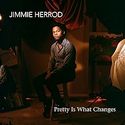 JIMMIE HERROD JIMMIE HERROD
PRETTY IS WHAT CHANGES
CD | Vinyl | Digital
There couldn't be a better title for silky-voiced high tenor Jimmie Herrod's collection of attractively reimagined selections from Stephen Sondheim's theatre scores than Pretty Is What Changes. And, oh, what changes have been wrought! The old road maps have been thrown away. Gorgeous, ethereal singing and instrumental accompaniment feature tempo changes, rhythms revised, and mood adjustments from the way they were arranged and sung when introduced in four Broadway shows in the 1970s and '80s (and similarly thereafter). Liberties are taken with melodic lines, strict structures are loosened, allowing for embellishments, skillful scat-singing, decorative melisma, and inventive jazz solos by the band members. The very familiar fare is reborn for the curious, opening up a sort of alternate universe for open-minded listeners. Purists who like theatre songs more ossified in their original forms may need more persuasion and repeat exposure.
Stratospheric singing shimmers and soars, sometimes becomes airy, and just when you think you're locked in Falsettoland, the voice lands gently on earth for low notes. While the adventurous vocalist makes the songs very much his own, invoking his artistic license with the melodies and their stage-born shapings, he keeps the lyrics basically intact, with a few minor tweaks, such as sometimes substituting the pronoun "he" for the name of the baker in "Everybody Loves Louis" and offering extended endings by repeating a key line, such "You make it beautiful" a few times at the end of "Beautiful" (the piece whose lyric contains the four-word statement that gives Pretty Is What Changes its title). Both selections are from Sunday in the Park with George, and both address the title character by name, a factor that makes many performers eschew tackling a showtune out of context.
To good advantage, Sweeney Todd is the musical most mined here, with four varied samplings on the 11-track release: the oft-heard "Pretty Women" (there's that "P" word again) and "Not While I'm Around," as well as two that are the unusual suspects: the calming advice to "Wait," which is kind of slinky here; and the kinetic "Kiss Me." The latter retains the distractions and frazzled nerves, despite its being a solo instead of a back-and-forth frantic exchange between two people.
Lyrics that are particularly yoked to musicals' specific plot incidents and characters are not deal-breakers for this stylist. The album is bookended by picks from Pacific Overtures, a score that has engendered few cover versions and doesn't get much (if any) representation on setlists for singers' Sondheim-centric projects or stage revues of the composer/lyricist's oeuvre. So, "A Bowler Hat" and the elegantly tender "There Is No Other Way" are especially welcome.
On a few tracks, Grammy Award winner John Beasley, the veteran jazz man, is credited as the singer's co-arranger (most are Mr. Herrod's own charts) and/or co-producer, as well as being in the band playing keyboards or synthesizer. He shares piano duties with George Colligan and Dawn Clement. Bassist Andrew Jones and subtle drummer Matt Mayhall appear on all tracks except "Any Moment" and "There Is No Other Way."
Jimmie Herrod continues on his musical adventures which have included writing his own songs, teaching, being in the top 10 in 2021 on the TV competition show "America's Got Talent," touring with the group Pink Martini (as he's doing this week and next), and performing a James Bond-themed concert in Canada in May, with more pizzazz to come.
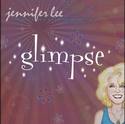 JENNIFER LEE AND THE EVER-EXPANDING UNIVERSE JENNIFER LEE AND THE EVER-EXPANDING UNIVERSE
GLIMPSE
SBE Records
CD | Digital
In sunny singer Jennifer Lee's liner notes for her most recent album, Glimpse, she states gratefully that five of the nine original songs included "were inspired by my wonderful husband." So we start off with their encounter, sweetly recalling that "when you caught my eye 'I Caught a Glimpse of Your Soul.'" And the romance continues with other complimentary commentaries. We hear her happily revel in the "sweet liaison and the vibrant new frontier of my heart" in "Vivid Technicolor Love." Another lovestruck entry is an ode to her spouse as her "Superhero."
The California-based songstress has a pleasant sound; her voice is overdubbed at times, creating soft, marshmallowy harmonies. She is co-credited for the arrangements and producing with Peter Sprague, who is the guitarist for five numbers. (She plays guitar for herself for three others.) There's a revolving company of musicians, many guesting on just one selection. Some tracks have a sultry Brazilian style, and all but three of the 11 tracks linger in the languid lane, clocking in at over five minutes, four of those going beyond the six-minute mark; they might have been more effective with fewer repetitions of sections at similar tempi. It's mostly a breezy, lightly swinging project, despite some lyrics that refer to love and life in a manner that strives to be deep.
Room is made for two extra songs that are not Jennifer Lee's originals. One is a kind of moody story-song called "Dave Don't Mind the Rain," written by friends Shanna Carlson and Cathi Walkup, recounting a personal experience involving a conversation with a pianist named–you guessed it–Dave (on a rainy day). The performer's dulcet tones and her ability to sing with feeling and heart, and effectively accompany herself on piano all shine on Glimpse's most impactful performance: a warmly phrased ballad version of "If I Only Had a Brain" from The Wizard of Oz. It's sublime.
 EMMA HEDRICK EMMA HEDRICK
NEWCOMER
Pathways Jazz
CD | Digital
There are no liner notes with the CD version of Emma Hedrick's debut recording, Newcomer, and although the back cover credits her as the vocalist and gives the names of the producer, one track's arranger, the engineers, and 16 people who participated as instrumentalists or singers, nowhere does it tell you who wrote any of the ten songs. Guess what: It's the singer. Maybe someone preparing the packaging assumed people would know? Well, this young woman turns out to have written some attractive material here, in addition to having an especially lovely timbre to her voice that can navigate tricky melodic phrases, project empathy and sincerity, and deftly approximate and complement the sounds of the instruments. There's much that's relaxed to the max, but the frisky "In the Warmth" percolates with percussion and sax.
Newcomer's title song, which refers to patience, the seasons, and a desire for freedom, features the singer-songwriter gracefully crooning wordless syllables, a string quartet, and Connor Rohrer's delicately dancing piano. Her sweet, soothing tone–a balm for the ears–is arguably the most rewarding element, though that can risk a listener being lulled by the laid-back, sweet vocalization and floating phrases of melody and not fully absorbing the words. But those lyrics do merit some attention, even if they don't deliver the most earth-shattering wisdom or unusual rhymes. But they have an authentic feel and directness.
The opening piece, "The Idea of Love," considers that "It's easy to fall in love/ All the frills, all the flowers/ Staying up for hours... It's the staying that's the hardest part." In "Inside Your Mind," she caringly plays life coach, encouraging a troubled person who's reluctant to open up ("Share your heart/ It doesn't need to hide"). When it comes to "Waste No More Days," the titular carpe diem advice could wear out its welcome when those four words are intoned at the end a total of sixteen times in a row. The moody "Tone Poem in Greenwich Village" about the place "where the jazz band plays" incorporates a short excerpt of Langston Hughes's poetry.
Producer Peter Eldridge, founding member of the still-active New York Voices, participates as pianist and some vocal harmonies on two tracks. (His presence is a plus, but I wish it were more prominently up front.)
I'll be interested to see what Emma Hedrick the "newcomer" comes up with next.
|
|